Differin Adapalene Gel 0.1% Review: Prescription-Strength Acne Treatment Now on Amazon (2026)
Differin Adapalene Gel 0.1% is a prescription-strength retinoid now available over the counter on Amazon — and it is the most clinically significant skincare development for acne-prone skin in years. The American Academy of Dermatology cites adapalene as a first-line acne treatment. After twelve weeks of nightly use, Differin delivered the clearest skin I have had since my teens, addressed the post-acne marks that vitamin C serums had only slowly faded, and improved overall texture in a way that standard retinol products had not matched.
This review covers what adapalene actually is and why it differs from standard retinol, how to build tolerance correctly without triggering the “retinoid purge” that causes most people to quit, who should use Differin, and why the most-recommended acne treatment by dermatologists is now one of the most repurchased skincare products on Amazon in 2026.
Contents
Quick Verdict
Best for: Acne-prone skin, post-acne hyperpigmentation, and anyone who has not seen results from OTC retinol products — adapalene is significantly more effective.
Skip if: You are pregnant — retinoids are contraindicated in pregnancy without physician approval.
Editor score: 9.6 / 10
Price tier: Around $13–30 depending on size
Differin Adapalene Gel — full review
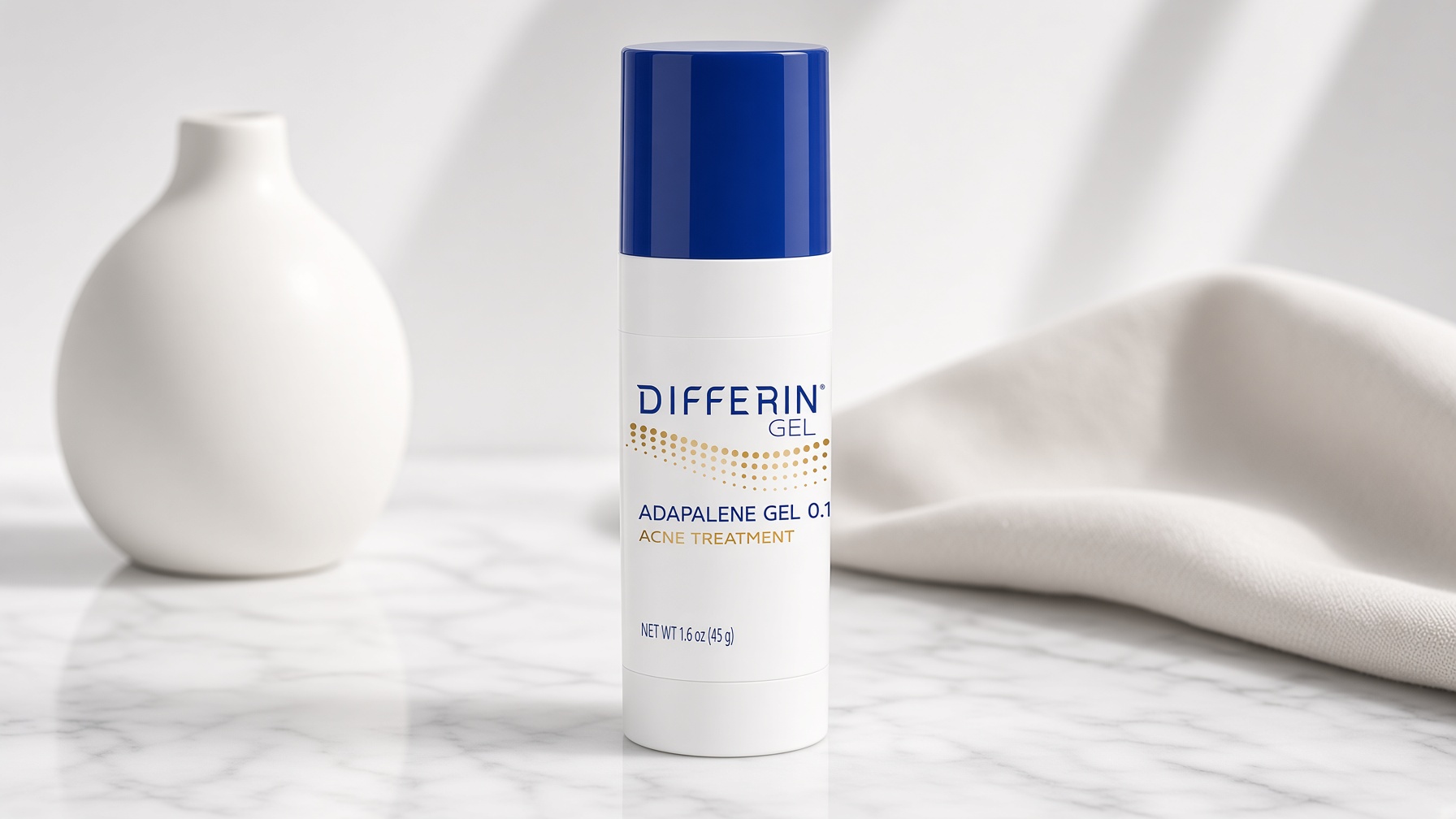
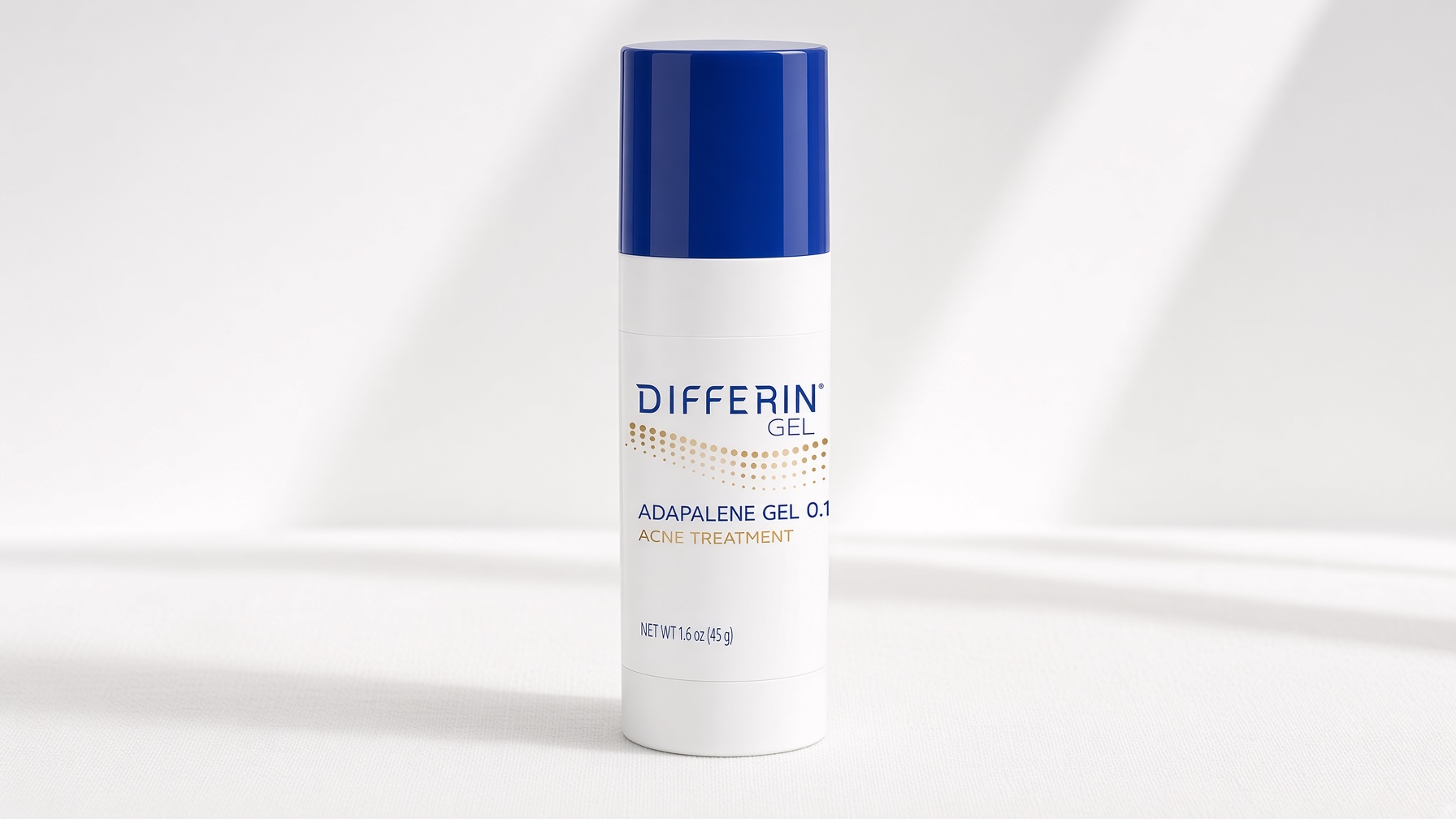
Differin Adapalene Gel 0.1%
Active: Adapalene 0.1% (synthetic retinoid)
Was: Prescription-only in the US until 2016
FDA approved for: Acne treatment
AAD recommendation: First-line topical acne treatment
Size: 15g / 45g
Use: Once nightly, pea-size amount, full face
Results timeline: 8–12 weeks for significant improvement
Why we picked it
Differin became OTC in 2016, making adapalene — a third-generation synthetic retinoid previously requiring a dermatologist prescription — accessible on Amazon for around $13. This is the single most significant OTC skincare development of the decade: a medication-grade acne treatment now sitting in the same Amazon cart as serums and toners, at a price anyone can afford. The American Academy of Dermatology specifically cites adapalene as a first-line topical treatment for acne, alongside benzoyl peroxide — before moving to prescription antibiotics or stronger prescription retinoids. Readers in 2026 consistently name it the product that “finally made a dent” in stubborn acne after years of ineffective OTC alternatives.
The reason Differin outperforms standard retinol products is not just marketing — it is chemistry. Adapalene is a synthetic retinoid specifically designed to bind to the retinoic acid receptors in the skin that regulate cell turnover and sebum production in acne-prone skin. It does this with greater receptor selectivity than retinol, which means more targeted acne action and, paradoxically, less skin irritation than equivalent concentrations of retinol. After twelve weeks of nightly use — the minimum timeframe to evaluate adapalene properly — my acne went from persistent breakouts to occasional single blemishes, and the post-acne marks that had lingered for months faded significantly faster than they had with any vitamin C serum I used previously.
Pros
- Prescription-strength retinoid available OTC — the most effective accessible acne treatment
- AAD first-line acne treatment recommendation
- More targeted and less irritating than equivalent retinol concentrations
- Addresses active acne, post-acne hyperpigmentation, and texture simultaneously
- $13–30 — accessible price for a medication-grade treatment
- Once-nightly application, pea-size amount — minimal time investment
- Consistently the most repurchased acne treatment in 2026 reader surveys
Cons
- Initial purge phase (weeks 2–6) can cause temporary worsening before improving
- Requires 8–12 weeks of consistent use before significant improvement appears
- Increases UV sensitivity — daily SPF is non-negotiable
- Not for use during pregnancy without physician approval
Adapalene vs retinol: why the difference matters
The retinoid conversion chain
Retinol (found in most OTC anti-aging serums) is a precursor that the skin must convert through two metabolic steps into retinoic acid — the active compound that actually interacts with skin cell receptors. Each conversion step loses potency. By the time retinol becomes active retinoic acid in the skin, only a fraction of the original retinol concentration is working. This is why retinol products require high concentrations and frequent use to produce meaningful results, and why they are less irritating — the gradual conversion limits how much active compound reaches the receptor at any time.
Why adapalene is different
Adapalene is a third-generation synthetic retinoid that bypasses the conversion chain entirely. It binds directly to the nuclear retinoic acid receptors — specifically the RAR-β and RAR-γ subtypes — that regulate epidermal cell differentiation and sebaceous gland activity. This direct binding produces more consistent, dose-predictable effects than retinol’s conversion-dependent action. Clinical studies comparing adapalene 0.1% to tretinoin 0.025% (a standard prescription retinoid) show comparable efficacy for acne with significantly less irritation from adapalene, due to its targeted receptor selectivity. For comprehensive clinical background, the American Academy of Dermatology’s topical acne treatment guide covers adapalene’s evidence base thoroughly.
Why adapalene works on post-acne marks
Post-acne hyperpigmentation (the brown marks left after a blemish heals) fades through accelerated cell turnover — the pigmented cells shed faster and are replaced by unpigmented new cells. Adapalene’s direct acceleration of epidermal cell turnover produces faster post-acne mark fading than vitamin C serums or AHAs alone. The three-pronged effect — clearing active acne, preventing new breakouts, and accelerating post-acne mark fading — is what makes Differin the most comprehensive OTC acne treatment available.
How to introduce Differin without a disaster
The tolerance-building protocol (critical)
Week 1–2: Apply Differin every third night only. Use a pea-size amount — genuinely the size of a pea — for the entire face. Apply after cleansing and moisturizing (yes, moisturizer first — this reduces irritation significantly). Week 3–4: Increase to every other night if no significant redness or peeling. Week 5–8: Move to nightly use. This gradual introduction prevents the severe initial irritation that causes most people to abandon retinoids unnecessarily.
The purge phase — what to expect and why not to quit
Weeks 2–6 typically involve a “purge” — a temporary worsening of acne as the accelerated cell turnover pushes existing microcomedones (clogged pores not yet visible as blemishes) to the surface faster than normal. This looks like more breakouts but it is actually existing clogged pores clearing faster. The purge phase is the most common reason people quit Differin before seeing results. If you understand what is happening, you can commit through it. The purge typically resolves by week 6–8, after which the skin is measurably clearer than before starting.
The daily SPF rule
Adapalene increases photosensitivity. Daily SPF 30+ is non-negotiable when using Differin. Morning application of a good daily face SPF — such as EltaMD UV Daily or Supergoop! Unseen — is the paired habit that makes Differin’s results sustainable. Without SPF, the accelerated cell turnover creates fresher, more UV-vulnerable skin that darkens faster in sun exposure, counteracting the post-acne mark improvement you are working toward.
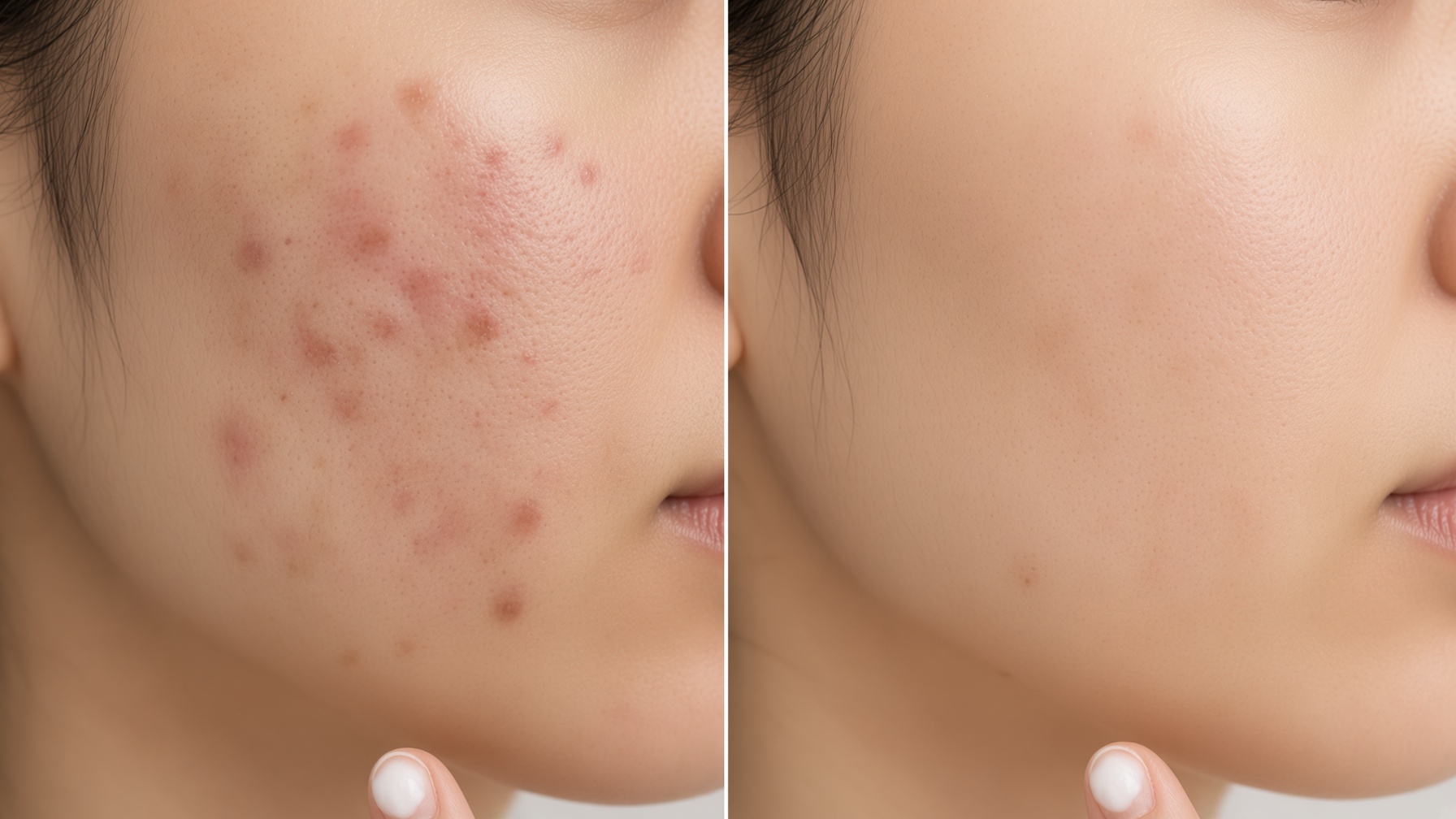
My 12-week results
Who should use Differin
Use it if:
- You have acne-prone skin that has not responded adequately to OTC benzoyl peroxide or salicylic acid
- You have persistent post-acne hyperpigmentation marks
- You have tried retinol products without satisfactory results — adapalene is significantly more effective
- You want the most clinically validated OTC acne treatment available without a prescription
- You are willing to commit 12 weeks and can tolerate the purge phase
- You will use daily SPF consistently (this is mandatory)
Do not use without physician consultation if:
- You are pregnant or trying to conceive — retinoids are contraindicated in pregnancy
- You are nursing
- You have eczema, rosacea, or very reactive skin — adapalene may be too irritating
- You are already using a prescription retinoid (tretinoin, tazarotene) — do not layer
Differin vs other retinoids
Differin Adapalene 0.1% vs OTC Retinol Serums
OTC retinol serums require skin conversion before becoming active, making them less predictable and less potent than adapalene at equivalent concentrations. For anti-aging alone (where retinol’s gentleness is acceptable), retinol serums are appropriate. For acne treatment specifically, adapalene’s direct receptor binding and FDA acne-treatment approval give it a clear clinical advantage. Differin is the better choice for anyone whose primary concern is acne rather than purely anti-aging.
Differin Adapalene 0.1% vs Tretinoin (prescription)
Prescription tretinoin (Retin-A) is more potent than adapalene and produces faster results — but also significantly more initial irritation, dryness, and peeling, and requires a dermatologist visit. For most people starting with retinoids, Differin is the correct first step. If 12–16 weeks of Differin produces insufficient improvement, a dermatologist can prescribe tretinoin as the next intervention.
Differin vs Innisfree Retinol Cica Ampoule
The Innisfree Retinol Cica Ampoule is a gentle retinol product optimized for sensitive skin with centella for calming — excellent for anti-aging and mild skin renewal with minimal irritation. Differin is a prescription-grade retinoid optimized for acne treatment with stronger receptor affinity. For sensitive skin seeking anti-aging: Innisfree. For acne-prone skin seeking clinical-grade treatment: Differin. They serve different primary use cases.
Differin FAQ
What is the purge and how long does it last?
The Differin purge is a temporary worsening of breakouts during weeks 2–6 as accelerated cell turnover pushes existing clogged pores to the surface faster than usual. It looks like new acne but represents existing microcomedones clearing faster. The purge typically resolves by week 6–8 for most users. Committing through this phase is essential — quitting during the purge means abandoning the treatment just before the improvement phase begins.
Should I apply Differin before or after moisturizer?
The traditional protocol is cleanse → Differin → moisturizer. However, the “sandwich method” (cleanse → moisturizer → Differin → moisturizer) significantly reduces irritation for sensitive skin beginners by creating a moisture buffer. Either approach works; use the sandwich method during the first 4–6 weeks to build tolerance, then transition to applying Differin directly on cleansed skin if desired.
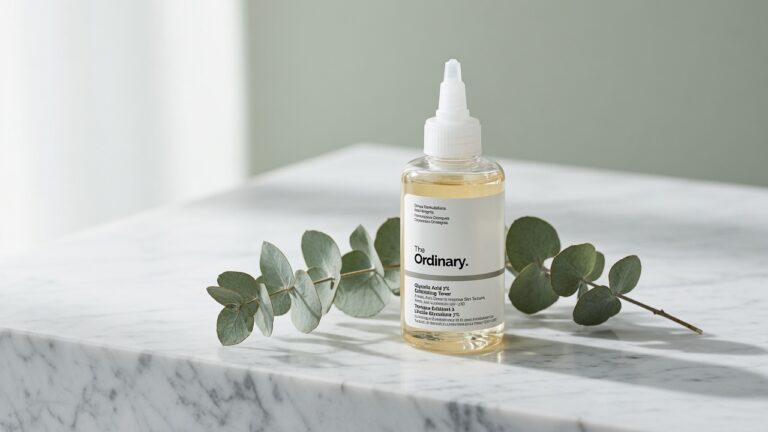
Can I use Differin with The Ordinary Glycolic Acid Toner?
Not on the same night. Both are skin-renewing actives that increase cell turnover — using them simultaneously causes over-exfoliation and significant irritation. Use Differin nightly and The Ordinary Glycolic Acid Toner on alternate nights, or use glycolic acid in the AM routine and Differin in the PM routine on non-overlapping nights. Many dermatologists recommend Differin nightly and AHAs 2–3 times per week on alternating nights for comprehensive skin renewal.
How is Differin different from Retin-A?
Retin-A (tretinoin) is a prescription retinoid that directly converts to retinoic acid on contact with the skin — more potent than adapalene and more irritating. Adapalene is a synthetic retinoid with selective receptor binding that produces comparable acne results with less irritation. Differin is the appropriate OTC starting point. Retin-A is the prescription escalation if Differin is insufficient after 3–4 months.
Can Differin be used for anti-aging as well as acne?
Yes — adapalene’s acceleration of cell turnover and stimulation of collagen production in the dermis produce anti-aging effects (improved texture, faded hyperpigmentation, smoother pores) alongside its acne action. Many dermatologists recommend adapalene as a first retinoid even for patients whose primary concern is anti-aging rather than acne, because its tolerability profile makes it more sustainable for long-term use than tretinoin.
Final verdict — Differin Adapalene Gel 0.1%
Differin Adapalene Gel 0.1% is the most important skincare product on Amazon for anyone with acne-prone skin — full stop. A prescription-strength retinoid now available OTC for $13, backed by the AAD’s first-line acne treatment recommendation, and consistently the product readers name as the one that “finally worked” after years of ineffective alternatives. After twelve weeks of nightly use, it delivered the clearest skin of my adult life. Commit through the purge, pair with daily SPF, and give it the full 12 weeks it requires. No other OTC product comes close to what adapalene delivers for acne-prone skin in 2026.