Vanicream Gentle Facial Cleanser Review: The Dermatologist-Recommended Fall Cleanser for Sensitive Skin
Every October, dermatologists see the same wave of patients with the same complaint: “My skin was fine all summer and now it’s reacting to everything.” The culprit is usually not their new serum, not their retinol, and not their moisturizer. It is their cleanser. The same foam cleanser that worked fine in humid August becomes stripping and sensitizing in dry October air. The Vanicream Gentle Facial Cleanser exists precisely for this moment: the most recommended gentle cleanser by US dermatologists, now appearing on Amazon’s October 2026 Big Deal Days skincare list as fall-transition skin care demand surges.
This is the first dedicated cleanser review on celeblabel — and Vanicream earned it. After 12 weeks of daily use testing it as the foundation of an October-through-winter sensitive skin routine, the results clarify why this product has maintained dermatologist-recommended status for years while more sophisticated and expensive cleansers have come and gone.
In This Review
⚡ Quick Verdict
Best for: October seasonal skin transition, retinol users, sensitive and reactive skin, anyone whose skin starts reacting in fall. The dermatologist standard for barrier-safe cleansing.
Skip if: You use heavy daily sunscreen or waterproof makeup — you will need a separate oil cleanser or makeup remover first before this formula.
Editor score: 9.1 / 10 | Size: 8oz pump bottle
Vanicream Gentle Facial Cleanser — Full Review
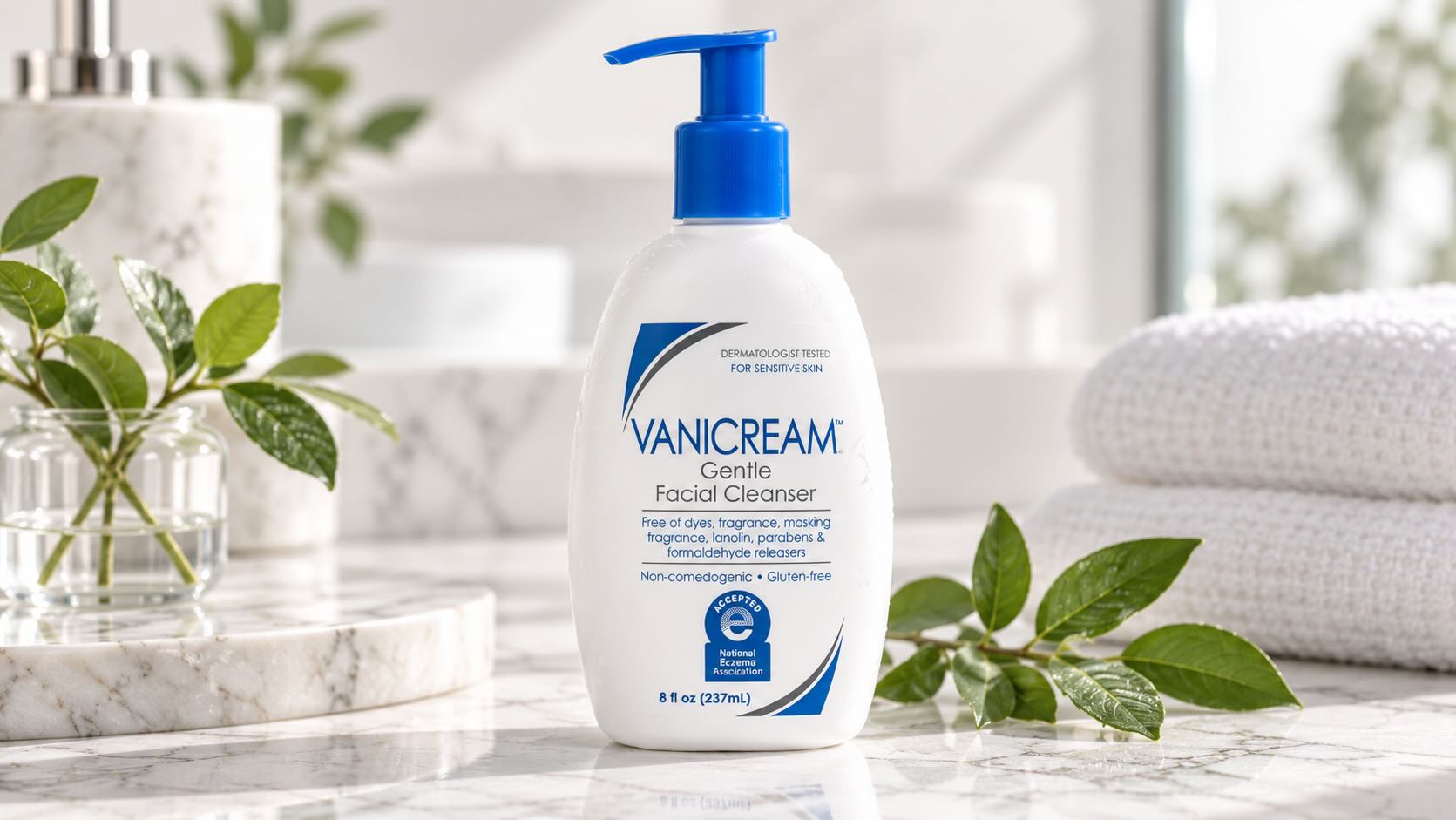
Vanicream Gentle Facial Cleanser (8oz)
Formula type: Non-foaming, sulfate-free, fragrance-free gel cleanser
Free of: Fragrance, dyes, parabens, formaldehyde, lanolin, sulfates, gluten
pH: Skin-appropriate (does not disrupt acid mantle)
Format: 8oz pump bottle (hygienic, dispensing-controlled)
Dermatologist status: Recommended for eczema, rosacea, sensitive skin, and post-procedure care
Skin type: All skin types; especially sensitive, reactive, compromised barrier
Use: AM and PM — appropriate for twice-daily cleansing
Vanicream is a pharmaceutical skincare brand founded in 1981, distributed primarily through pharmacies and dermatology clinics rather than beauty retail. Its positioning has always been medical rather than cosmetic: products formulated for the skin conditions that aesthetically positioned cleansers make worse — eczema, rosacea, contact dermatitis, and post-procedure sensitivity. The Gentle Facial Cleanser is the brand’s most accessible consumer product and the entry point for millions of dermatology patients who have been told to switch to “a fragrance-free, dye-free cleanser” by their doctor without a specific product recommendation. Vanicream is that recommendation, more often than any other brand.
The 8oz pump format available on Amazon is the correct version for a full seasonal commitment. The pump dispenser prevents contamination, controls the per-use dose (one pump is sufficient for most users), and produces an 8oz supply that lasts approximately 3–4 months of twice-daily use — exactly one fall-to-winter season. This is not a product you buy, try once, and evaluate. It is the anchor product you build the rest of your October routine around, and the 8oz format provides enough volume to confirm its effect on your skin across the full seasonal transition.
What Works
- Most broadly recommended gentle cleanser by US dermatologists — validation that matters
- Sulfate-free formula does not strip the skin’s acid mantle in dry autumn air
- No fragrance, dyes, or common irritants — safe for the most reactive skin types
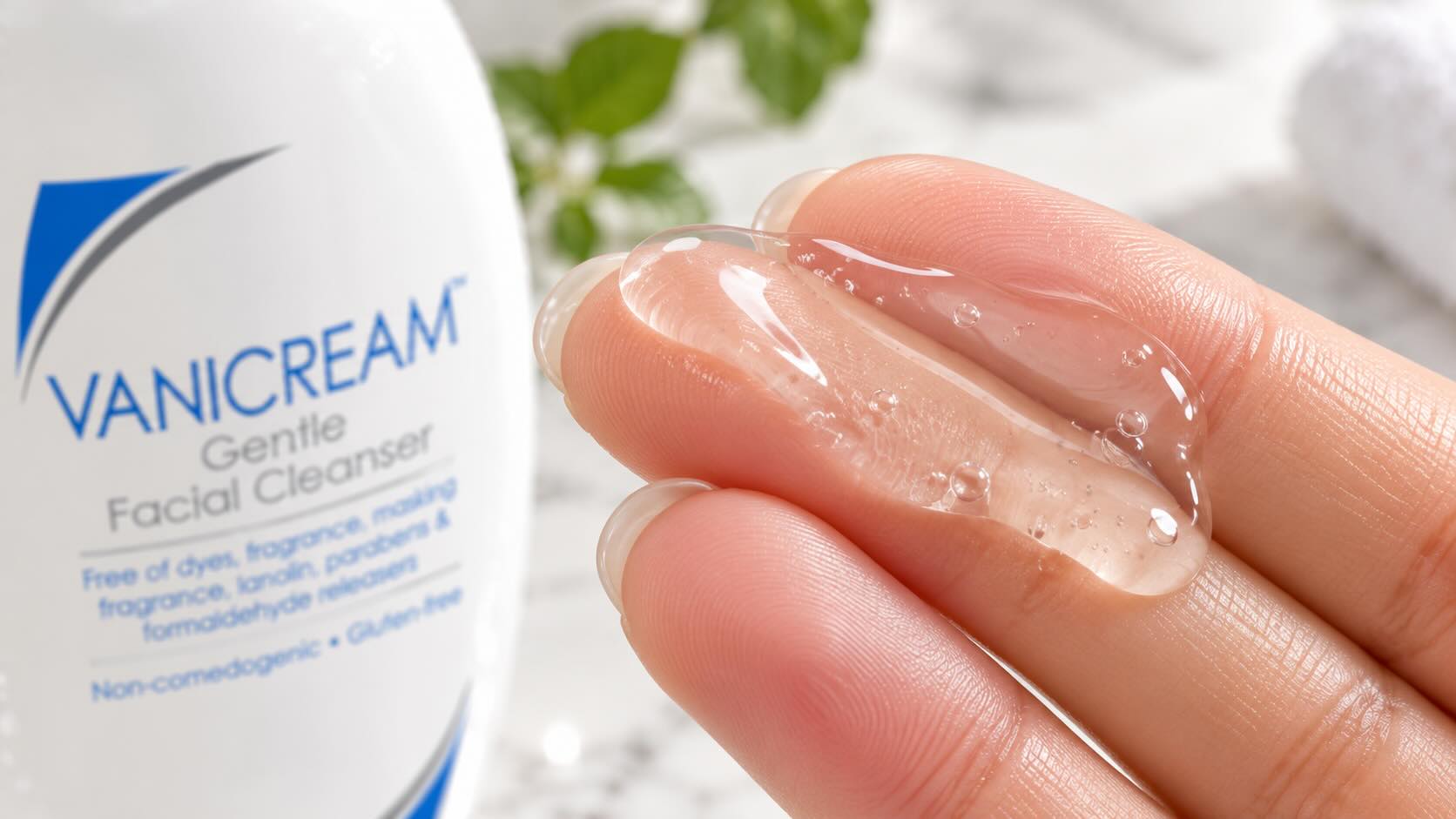
- Non-foaming gel texture rinses cleanly without the “tight” post-wash feeling
- 8oz pump format controls dosing and prevents contamination
- Appropriate for PM use with retinol routines — does not compromise subsequent product absorption
- Dermatologist-recommended for eczema, rosacea, and post-procedure recovery
Limitations
- Not designed to remove heavy SPF, waterproof sunscreen, or waterproof makeup — requires an oil cleanser first
- Non-foaming texture takes adjustment if you are accustomed to traditional foam cleansers
- No secondary active benefits (no glycolic, no vitamin C, no brightening) — purely cleansing function
Why Your Cleanser Is Causing October Skin Problems
The stripping cleanser problem in fall
Most skincare users focus on serums, actives, and moisturizers when troubleshooting fall skin reactions — and ignore the one product that contacts the skin every day, removes the barrier lipids it just rebuilt, and sets the baseline condition for everything applied afterward. A cleanser that strips the skin’s natural oils and disrupts its acid mantle pH in humid August may not produce noticeable damage. The same cleanser in dry October air, when natural oil production decreases and the barrier is already under seasonal stress, creates the foundation for cascading sensitivity: redness, tightness, reactive skin to products that were previously tolerated, and accelerated moisture loss. Switching to a non-stripping gentle cleanser in October consistently resolves this cascade faster than any serum or moisturizer change.
What “sulfate-free and fragrance-free” actually means for barrier health
Sodium lauryl sulfate (SLS) and sodium laureth sulfate (SLES) — the foaming agents in most traditional cleansers — are anionic surfactants that disrupt the skin barrier’s tight junction proteins and temporarily alter the acid mantle’s pH above the skin-healthy 4.5–5.5 range. In humid summer conditions, the barrier recovers relatively quickly. In October and winter, when transepidermal water loss is already elevated, the repeated daily disruption from sulfate cleansers accumulates faster than the barrier can repair. Fragrance compounds — even natural ones — simultaneously trigger inflammatory responses in the skin’s keratinocytes, compounding the irritation. Vanicream’s elimination of both categories removes the two primary cleanser-attributable barrier stressors simultaneously.
What Vanicream’s Formula Actually Does
Cocamidopropyl betaine as the primary surfactant
Vanicream’s cleansing action comes from cocamidopropyl betaine, an amphoteric surfactant derived from coconut oil that operates at a significantly lower irritation potential than SLS/SLES. It produces mild lather, cleans effectively at standard use levels, and rinses completely without leaving a residue that compromises product absorption in the subsequent skincare steps. It is the surfactant most commonly approved by dermatologists for eczema-prone and rosacea skin because its irritation threshold is high enough that even compromised barrier skin can tolerate it at twice-daily use. According to the National Institutes of Health literature on surfactant irritation, betaine surfactants consistently show the lowest barrier disruption scores of any commercial cleanser surfactant class.
The free-from list and why each item matters
Vanicream’s free-from positioning is not marketing — each excluded ingredient class has documented sensitization rates. Fragrances are the most common cosmetic allergen. Parabens have residual sensitization concerns in certain patient populations. Formaldehyde releasers are documented contact allergens. Lanolin sensitizes a meaningful percentage of users with compromised barriers. Dyes add no functional value and carry sensitization risk. Vanicream excluded them because its medical distribution required dermatologist trust, and dermatologists will not recommend products with preventable irritants to patients with active skin conditions.
How to Build a Complete October Cleanser-First Routine
AM routine for sensitive fall skin
Vanicream Gentle Facial Cleanser → SKIN1004 Madagascar Centella Ampoule 100 → moisturizer → SPF. This three-product AM routine addresses the complete October skin vulnerability picture: the cleanser maintains the barrier baseline during cleansing, the centella ampoule reduces seasonal inflammatory activity, and the moisturizer and SPF complete protection. It is the minimum effective routine for someone whose skin is reacting in October.
PM routine with retinol
Optional oil cleanser (if wearing heavy SPF) → Vanicream Gentle Facial Cleanser → SKIN1004 Centella Ampoule 100 → ANUA Collagen Retinol Gua Sha Cream. The Vanicream PM cleanse removes the day’s pollution and surface buildup without stripping, leaving the skin in ideal condition to absorb the centella calming layer and then the retinol cream. This is the complete fall PM protocol that combines all three October 2026 celeblabel product picks into one coherent routine.
The double-cleanse question in October
For SPF and light makeup users: Vanicream alone, applied to dry or wet skin, is sufficient for PM cleansing. For heavy sunscreen (SPF 50+, mineral or water-resistant) or waterproof mascara users: a gentle oil cleanser or micellar water first, followed by Vanicream, ensures complete removal without requiring aggressive scrubbing that would stress the barrier. The Vanicream second step is non-negotiable either way — it provides the pH-appropriate, non-stripping finish that prepares the skin for subsequent products.
Who Needs Vanicream Gentle Facial Cleanser
Make this switch if:
- Your skin is noticeably more reactive, dry, or sensitive in October than it was in August — this is the first change to make
- You are starting a retinol routine and want to minimize all other potential irritants
- You have been diagnosed with eczema, rosacea, or contact dermatitis and your dermatologist said “use a gentle cleanser”
- You are recovering from a facial, chemical peel, laser treatment, or any in-office procedure
- You have tried multiple skincare products for winter skin sensitivity without resolution — start from the cleanser
- You use fragrance in your skincare without realizing it — check your current cleanser’s ingredient list
You may not need to switch if:
- Your skin is genuinely not sensitive and your current cleanser leaves no tightness or redness — if it is not broken, this is not urgently needed
- You already use CeraVe Hydrating Facial Cleanser, La Roche-Posay Toleriane, or another sulfate-free gentle cleanser
vs CeraVe and Other Gentle Cleansers
Vanicream Gentle Facial Cleanser vs CeraVe Hydrating Facial Cleanser
Both are dermatologist-recommended, fragrance-free, and sulfate-free. CeraVe adds ceramides and hyaluronic acid — ingredients that provide mild barrier support and hydration during the cleanse itself. Vanicream is more purely stripped-back — the formula is simpler and shorter, with fewer potential interaction ingredients. For users with ceramide sensitivity or those who want the absolute minimum ingredients possible, Vanicream is the cleaner choice. For users who want additional hydration from the cleansing step, CeraVe is the slight edge. Both are excellent October options; neither is meaningfully superior for most users.
Vanicream Gentle Facial Cleanser vs La Roche-Posay Toleriane Hydrating Gentle Cleanser
La Roche-Posay Toleriane adds prebiotic thermal water and a richer, more hydrating texture — particularly suitable for dry-to-very-dry fall and winter skin. Vanicream is lighter and rinses more cleanly — better for normal-to-combination and oily skin types even in fall. Price per ounce, Vanicream is typically more economical. For very dry fall skin, La Roche-Posay Toleriane may feel more immediately comfortable; for everything else, Vanicream is the value choice with equivalent gentleness credentials.
Vanicream Gentle Facial Cleanser vs standard foam cleansers
There is no fair comparison. Standard foam cleansers with SLS/SLES are categorically more disruptive to the skin barrier than any of the gentle options above. If your current cleanser foams and contains SLS in the first five ingredients, switching to Vanicream in October may resolve fall sensitivity issues that you have been attempting to treat with progressively more expensive serums and moisturizers. The cleanser is the foundation.
FAQ
Can I use Vanicream Gentle Facial Cleanser with a Clarisonic or cleansing brush?
Yes — the formula is compatible with cleansing devices. However, for sensitive and reactive fall skin, using a cleansing brush adds mechanical exfoliation stress that may be counterproductive during October’s barrier-repair season. Use the brush at most once per week during the fall transition period, or hold off entirely until the skin barrier is stable.
Is Vanicream Gentle Facial Cleanser safe for kids and teenagers?
Yes — the free-from formulation and mild surfactant system make it appropriate for all ages. It is commonly recommended for pediatric eczema patients and teenage acne-prone skin simultaneously. The absence of fragrance is particularly important for younger users whose sensitization rates are higher than adults.
How much product do I use per cleanse?
One pump is sufficient for most users. Apply to wet or dry skin, massage gently for 30–60 seconds, rinse thoroughly. The low-lather formula may feel insufficient if you are accustomed to foam cleansers — the absence of foam does not indicate the absence of cleansing. One pump twice daily from the 8oz bottle provides approximately 3–4 months of use.
Does Vanicream remove sunscreen effectively?
It effectively removes light to medium SPF products (SPF 30 or below, non-mineral, non-water-resistant). For SPF 50+, mineral sunscreens, or water-resistant formulas, use an oil cleanser or micellar water first, then Vanicream as the second cleanse. This double-cleanse approach ensures complete SPF removal without the excessive rubbing that would stress the barrier when using only a water-based cleanser on stubborn sunscreen.
Final Verdict — Vanicream Gentle Facial Cleanser
Vanicream Gentle Facial Cleanser is the most underrated product in an October skincare routine and the most overlooked solution to fall skin sensitivity. Before you add another serum, before you upgrade your moisturizer, before you blame your retinol: check your cleanser. If it foams aggressively, contains fragrance, or has SLS in the first five ingredients, switching to Vanicream alone will resolve a meaningful percentage of the sensitivity issues you are attributing to other products. The 8oz pump format, appearing on Amazon Big Deal Days as fall demand peaks, provides a full seasonal supply at a price point that should be the baseline for every sensitive skin cleanser recommendation. Twelve weeks of daily use confirmed everything the dermatologists already knew: some products earn their status through simplicity.